




A garden bench is one of the few pieces of furniture you will sit on for twenty minutes at a stretch, in all weathers, often with a mug in one hand and a book in the other. Yet most of us buy one the way we buy a cushion cover: by look and by luck. The result is a bench that is beautiful and slightly wrong — too tall, so your feet dangle; too deep, so your back never finds the rest; or just wide enough to make the garden path feel like a corridor. None of that is a matter of taste. It is a matter of measuring.
Here is how to work out the right size before you order, using nothing more than a tape measure, a kitchen chair and ten minutes in the garden.
Start With the Space, Not the Bench
Mark the footprint first. Two canes and a length of string will do, or a dust sheet folded to size and pegged down. Leave it there for a day or two and watch how you move around it. You will learn more from that than from any photograph of a bench in a showroom.
On a patio, try to sit the bench so its feet land in line with the slab joints rather than halfway across a slab. It sounds fussy, but a bench that respects the paving pattern always looks as though it belongs. On a lawn, check what is underneath the turf: buried irrigation, a shallow root, or ground that stays soggy in winter. A heavy oak bench will sink into soft ground over a season and sit unevenly.
Also check the small things that ruin a good position: a gate that swings back, a tap you need to reach, a downpipe that drips, the route you take with a wheelbarrow, and any low branches that will be in your eyeline when you sit down.
Seat Height: The Measurement That Decides Everything
Most outdoor benches sit at around 43–46cm from the ground to the top of the seat. That range suits the majority of adults because it lets you sit with your feet flat, your thighs roughly level and no pressure behind your knees.
Rather than guessing, test it. Take a dining chair into the garden — most are around 45cm — and sit on it where the bench will go. Better still, put a couple of books on the chair to raise it if you are considering a taller bench, or sit on a lower stool if you are drawn to a lounging design. What you are looking for is simple: feet flat, knees bent at roughly a right angle, and the ability to stand up again without heaving.
Two adjustments catch people out:
- Cushions. A 4cm seat pad raises your seat height by 4cm. If you plan to use one permanently, buy a bench slightly lower than you otherwise would.
- Age and knees. Lower benches look relaxed but are harder to rise from. If anyone in the household has stiff joints, err towards 45–46cm, and choose a bench with solid arms to push against.
As a rule, people over about 1.8m tend to be more comfortable with a taller seat and a deeper bench; shorter sitters often find the same bench leaves their feet swinging and their back unsupported. If the household covers a wide range of heights, a standard 45cm seat is the fairest compromise.
Seat Depth and Back Angle
Seat depth is the measurement from the front edge of the seat to the backrest. For upright sitting — tea, conversation, a plate on your lap — 40–45cm is comfortable for most adults. Go shallower than about 38cm and you get no support under the thighs; go deeper than 50cm and shorter sitters will find themselves perched forward, propped up by nothing.
Deep benches are wonderful for lounging, but they demand more room in front of them, because your legs stretch out further when you sit. If your bench will sit on a narrow patio against a wall, a shallower seat keeps the walkway usable.
Back angle matters as much as depth. A backrest that tilts back by roughly 10–15 degrees is comfortable for long sitting without tipping you into a slouch. Very upright backs feel formal and suit a bench used for eating; more reclined backs suit reading and an afternoon doze. If you can, sit on the bench before buying — or at least look for photographs taken straight from the side, where the angle is visible.
Clearance: The Space Around the Bench
Clearance is the number people forget, and it is the one that makes a garden feel generous or cramped. As a working guide:
- In front of the seat: allow 45–60cm for legs and for someone to pass behind a seated person.
- Main routes past the bench: keep 90–100cm clear if it is a path people use regularly.
- For a walking frame, wheelchair or pushchair: allow closer to 120cm and keep the surface firm and level.
- Behind the bench: 25–30cm from a wall or hedge, so the back can breathe, rainwater can run off, and you can reach behind it to clean and re-oil the oak.
- To the side: 40–60cm if you want a small side table for drinks, or room to plant something soft around the feet.
If a household member has difficulty with balance or mobility, it is worth asking an occupational therapist for advice on seating height and access before you buy. It is a short conversation that saves a lot of discomfort.
Getting the Proportions Right
Length is where proportion does its quiet work. A single bench against a garden wall usually looks best when it covers roughly half to two thirds of that wall, leaving breathing space at each end. A 1.5m bench against a 3m stretch of wall, with a planter on one side, will look far more considered than a 3m bench filling it edge to edge.
As a rough guide to seating: about 1.2–1.5m suits two people, 1.5–1.8m suits three, and anything from 1.8m upwards will seat four without shoulder contact. Remember that arms add width — a bench with arms is wider overall than its seat length suggests, sometimes by 10cm or more at each end.
Scale against the rest of the garden matters too. A small bench adrift on a large lawn looks lost; two modest benches placed facing each other, or an L-shaped arrangement in a corner, will hold the space better. Solid oak is heavy, so anything over about 1.2m is a two-person job to move — worth knowing if you like to shift furniture around with the seasons.
A Practical Closing Check
Before you order, run through this once: measure the space and mark it; decide where you want the feet to land; sit on a chair of the right height and check your feet and knees; add cushion thickness to your calculations; measure the clearance around the bench, including your regular routes; and measure the narrowest point on the way in from the front gate or side passage.
Then ask yourself the only question that really matters: how will this bench be used? A bench for morning coffee needs a comfortable seat height and a back you can lean into. A bench for long lunches with a table needs a slightly deeper seat and arms that do not clash. A bench for reading in the shade wants a reclined back and room to stretch out. Get those four measurements right — height, depth, length and clearance — and the oak bench you choose will look as though it has always been there.
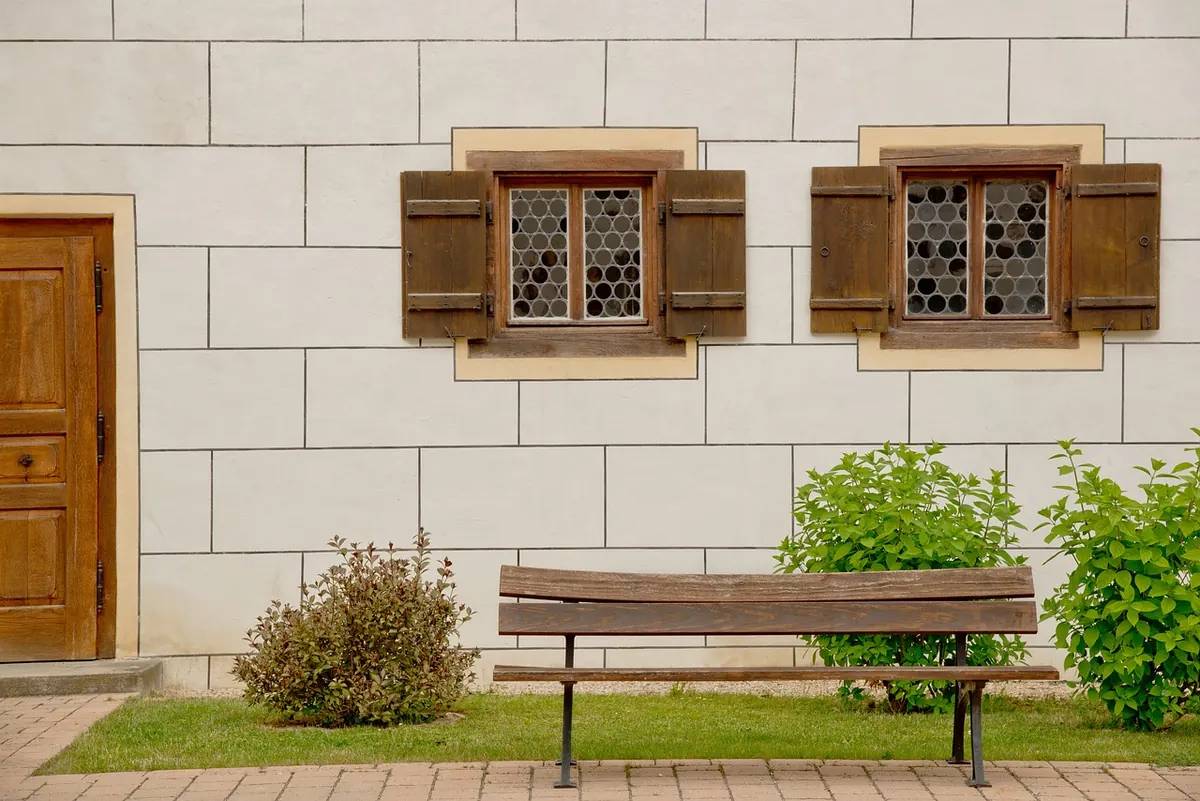
Photo: vwald / Pixabay